To Fully Implement the HSBP, You Need to Close One Critical Gap
From Platform to Opportunity: The Adapter That Will Migrate Students From High School to Their Post-Graduation Opportunity
Washington's SSB 5243 mandate asks every district to make the High School and Beyond Plan a meaningful tool — not a checkbox activity. After reading the Washington State Board of Education's 2025 HSBP Recommendations Report, I want to name the gap that most platforms, including SchoolLinks, aren’t designed to close. If we close this gap, we will be able to show measurable post-graduation impact that supports the broader FutureReady vision for Washington students. Honestly, it's low-hanging fruit that will amplify the return on your investment.
Let me explain what it is.
The Problem with "Prepare" and "Connect"
In every real-world learning and future-ready framework — including Washington's HSBP — three words are always emphasized: prepare, explore, connect.
Prepare. How do we prepare students for post-graduation success?
In part, this depends on the college and career path that’s right for them. So, we need to provide more opportunities to…
Explore. We have to build programming outside of core classes for students to explore different paths, which means that eventually they need to…
Connect. We have to build networks to connect them with colleges and employers.
Here’s the challenge: Connecting students doesn’t actually get them to their post-graduation opportunity.
For our college-bound students, pointing them to scholarship databases, facilitating FAFSA help, and giving students checklists and deadlines all help, but the application is what wins them admissions and financial aid. For our career-path students, connecting them to Career Connect Washington is a start — but it doesn't get them hired once they walk across the stage at graduation.
This is the key gap in real-world, future-ready style implementation plans. It’s the step beyond preparing, exploring, and connecting.
The next verb is "migrate."
We have to teach students how to migrate from your platform to their next one.
The Adapter Problem
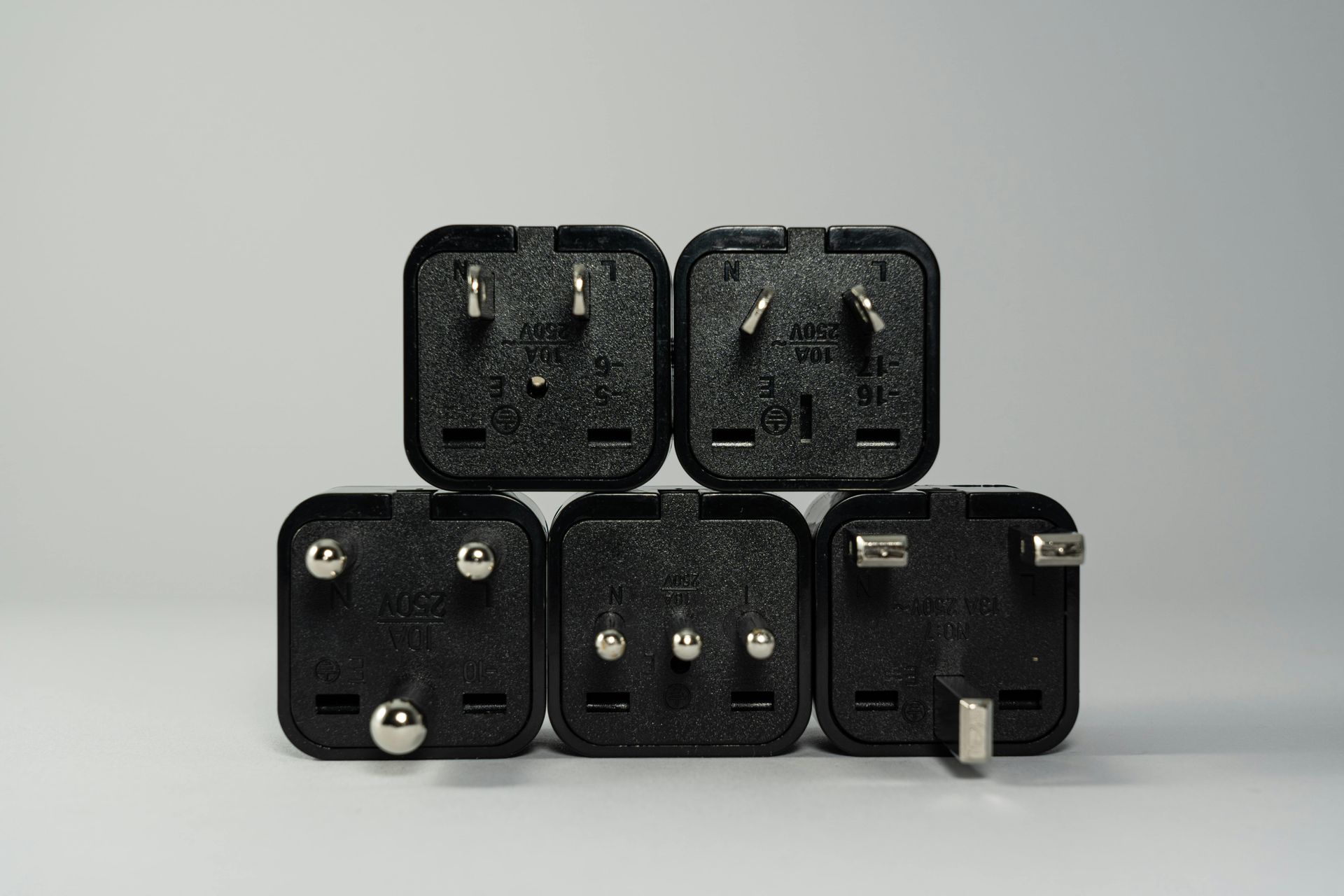
Think of your school's HSBP-documented experiences as a platform — one that develops the skills, character, and real-world experiences that will win students admissions and competitive financial aid at the right college, or the credentials and portfolios that will get them hired. Post-graduation, students migrate from your platform to the next one. To do that, they need the right adapter that will plug them into that opportunity.
The adapter that connects high school to college is the college application. The adapter that connects high school to employment is the career application and interview process. Without it, your students can’t get from one to the other.
This is the gap. It's a real problem with measurable, material impact — not just on post-graduation outcomes, but on the extraordinary anxiety of senior year. In the latest NACAC research, over half of students rank the college application as their most stressful academic experience. That stress is not just emotional — it's a signal that students don't know how to do it.
Why the Application Is the Whole Ballgame
In today's admissions landscape, tests are optional and high school GPAs are inflated. Students participate in extracurriculars and accumulate service hours. Many applications are virtually indistinguishable on paper. What colleges are actually screening for — and what employers increasingly demand — is character, communication, empathy, collaboration, proactivity, and executive functioning. These are precisely the durable skills that Washington's HSBP and Career Connect experiences develop.
But here's the catch: those experiences only open doors if students know how to leverage them in the precise format of the application.
Think of the college application as grant writing for high school seniors. It's a storytelling exercise that requires students to explain why they're the right fit for a specific school — translating experiences into essays, activity lists, and recommendation narratives that score well against rubrics most students never see. Real-world experiences can anchor award-winning applications. But only if students know how to use them.
The same is true on the career side. Durable skills and personal narrative are central to career-path applications and interviews — but pointing students to a job fair doesn't teach them how to tell their story.
What "Checklist" Platforms Miss
Here's what NACAC data makes clear: a vast majority of students report feeling overwhelmed by the college application not because they don't know it's due, but because they don't know how to do it.
This is why data aggregation platforms — tools that track who hasn't turned in what — don't solve the real problem. SchoolLinks gives students a place to document their HSBP journey. AVID provides checklists and structured support.
These are valuable. But neither teaches students how to create a compelling application from the experiences they've accumulated.
Even 1:1 advising runs into this wall. If students don't understand how a college application works before they sit down with a counselor, that precious face time gets consumed with high-level explanations instead of strategic coaching. Students report not understanding why their advisor is advising them — because they don't understand the underlying system.
The solution isn't more tracking. It's curriculum. It's instruction. It's the same thing that works everywhere else in education: equipping teachers with the right knowledge and professional development to teach students how to do something hard.
The challenge for administrators is finding the time, space, and materials to teach them. Washington's own SBE data shows that 80% of districts deliver HSBP through advisory periods or annual activities, and only 42% embed HSBP activities in a credit-bearing course — and even those are partial embeds that require co-teaching and robust secondary supports. There is no standardized place where "how to create a college application" gets taught.
The impact is real and measurable. The Michigan Department of Education found strong post-secondary outcomes — in both college enrollment and college graduation — in schools where college planning, including specific application instruction, is systematically taught. This is especially true for low-income and first-generation college students: the exact students Washington's equity commitments are designed to serve.
The Washington Opportunity
Washington has built something real with the HSBP. The experiences students are documenting in SchoolLinks — career exploration, competency-based learning, CTE pathways, community service — are exactly what college application readers and employers say they want to see. Washington's FutureReady Initiative is building the framework to make this systemic.
The missing link is the adapter. The districts that build systematic application support now — teaching students how to translate their HSBP experiences into compelling applications — will be the ones who can demonstrate measurable post-graduation outcomes when FutureReady accountability arrives in 2027. Not scramble to document it after the fact.
That's the work Appliquest™ was built to support: giving every public school student access to the quality of application instruction that has always been a private-school advantage — and giving Washington's HSBP investment the last mile it needs to actually pay off for students.
If you're working through your HSBP implementation plan and want to think through how application support fits, I'd welcome a conversation.
Dr. Stephen Himes is co-founder of Storyboards College Admission Portfolios and a longtime public school educator with expertise in college admissions law and career application support.